Future of Coffee
Java’s Long Shadow: Why Indonesia Is Still One of Coffee’s Most Important Origins
Published: July 28, 2026 05:35 AM
Written by: Admin
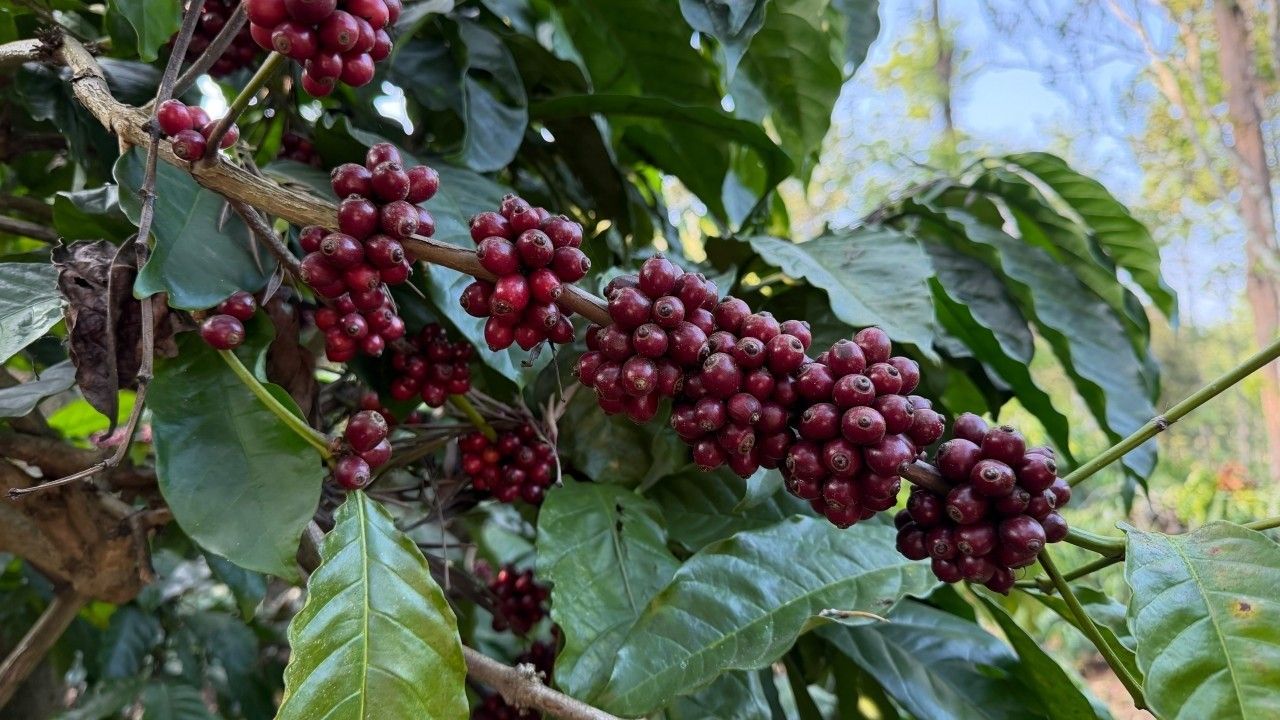
One of the few place names in the world that has come to represent a daily habit is "Java." When you mention coffee in a diner in the United States or an airport café in Europe, people immediately understand what you mean. There's more to that linguistic mistake than just trivia. It is proof of how profoundly Indonesia has influenced the world's coffee narrative, not just in terms of volume but also in terms of history, genetics, and an archipelago-level diversity that defies categorization into a single flavor note.
Numbers are frequently used to introduce Indonesia. It is predicted to generate about 12.45 million 60-kilogram bags in the 2025-2026 season, placing it among the top producers worldwide. While retaining a lesser but significant Arabica presence, it is also one of the cornerstones of the global Canephora supply. Approximately 1.2 million hectares of coffee are grown, primarily by smallholder farmers, many of whom cultivate one hectare.
However, if we limit ourselves to statistics, we fail to see Indonesia's strategic significance. Indonesia is not a single origin. Future solutions, sensory signatures, and coffee histories are all part of this archipelago. In order to comprehend why Indonesian coffee is still so important, we must first follow Java's lengthy shadow before tracing how crisis and adaptability molded the nation into one of coffee's most complicated sources.
How Java became a global coffee word
Coffee did not first emerge in Indonesia. Ethiopia is the original home of Arabica, while Yemen played a crucial role in developing early coffee culture and trade. Indonesia's involvement is distinct and arguably equally transformative. It became a pivotal relay point for the global dissemination of cultivated Arabica.
The initial successful establishment of Arabica in Java by the Dutch is typically dated to the late seventeenth century, when Typica material was transferred from the Malabar coast of India to Batavia, now known as Jakarta, following an earlier unsuccessful attempt. From that point, Java's coffee narrative expanded well beyond the island. A coffee plant originating from Java was dispatched to Amsterdam in the early eighteenth century, contributing to one of the pathways through which Typica was introduced to the Americas.
That means when you taste a classic Typica descendant in the Americas today, you are experiencing a genetic journey that passed through Java. Indonesia was not just a receiving location. It became a crucial point in the globalization of Arabica.
Leaf rust and the reshaping of Indonesian coffee
Colonial institutions that arranged agriculture to meet European demand were linked to Java's growth. The map was then altered by coffee leaf rust. A weakness at the core of cultivated Arabica, a limited genetic foundation and susceptibility to illness and environmental stress, was revealed by rust.
Rust forced Indonesia's agricultural sector to adopt new species, breeding techniques, and agricultural compromises. Around the turn of the 20th century, Canephora arrived in Indonesia and progressively rose to prominence as the nation's leading manufacturing hub. In some lowland and disease-stressed environments, liberica and allied varieties also played roles. What appeared to be a defeat turned into a protracted national adaptation experiment.
Timor Hybrid and Indonesia’s genetic importance
Timor is the genetic headline if Java is the historical symbol.
The Timor Hybrid, a naturally occurring cross between Coffea arabica and Coffea canephora that emerged on the island of Timor, is one of Indonesia's most notable contributions to the world of coffee. This Arabica-type plant with rust-resistant characteristics linked to Canephora genetics was a unique gift for breeders. In the middle of the 20th century, seed from this material entered breeding programs, influencing many later rust-resistant cultivars used far beyond Indonesia as well as Catimor-type lines.
This is not just a story for scientists. It serves as a reminder that genetic complexity will determine coffee's destiny. Resilience and cup quality are frequently discussed in the industry as distinct subjects. In actuality, coffee origins and cultivation practices that can balance both will be rewarded in the next period.
Indonesia’s flavors are not one flavor
Many consumers still associate "Sumatra" with a familiar profile: earthy depth, spice, tobacco, cedar, earthy body, and muted acidity. Wet-hulled processing, or giling basah, which emerged as a useful reaction to humid weather and local supply chain realities, is partially responsible for this reputation.
Indonesian coffee, however, is not a single profile. Island topography, species, cultivar, altitude, rainfall, shading systems, post-harvest practices, storage, logistics, and roast interpretation all influence this range of options.
Scientific sensory research on Indonesian single-origin organic coffees has revealed variation in areas including East Java, the highlands of Papua, and Toraja in South Sulawesi. Depending on the product and roast, preferences and dominant characteristics can range greatly, from floral and sweet impressions to chocolate-toned aromatic inclinations to nutty and cocoa overtones.
An archipelago designed for differentiation
The topography of Indonesia almost demands distinction. Particular limitations and opportunities are created by volcanic soils, steep hills, wet woods, maritime air, and dispersed infrastructure. Another layer is added by smallholder dominance. Growers rather than huge estates produce more than 95% of Indonesia's coffee, and the typical farm size is tiny.
Although this decentralization results in remarkable diversity, it may also lead to instability. Consistency from harvest to harvest may be challenged by the same factors that provide uniqueness.
Why Indonesia matters right now
Stress from the past is becoming the norm due to climate change. The pressure of disease is not going away. Origin strategy is changing everywhere due to labor availability, farm profitability, aging trees, price volatility, and land-use rivalry.
Indonesia has learned that diversity and crises are inextricably linked. One version of Java's coffee domination was destroyed by leaf rot, but the wider region gave rise to Canephora acceptance, experimentation, Timor hybrid genetics, and a cultivar mosaic that continues to have an impact on the world. Indonesia has never been unchanging. The beginning has always been in motion.
For this reason, Indonesia merits fresh consideration. The most significant origins in the future won't always be those with the simplest narratives. They will be the first to combine meaning, diversity, scale, and resilience. It already exists in Indonesia.
Looking for an Indonesian Coffee Supplier?
We would be happy to get in touch if you are buying Indonesian green coffee and need an Indonesian coffee supplier who is aware of the diversity of the archipelago.
Le Green Coffee assists customers in matching the ideal island, technique, and profile to their roasting objectives by collaborating with partners throughout Indonesia. Go to Le Green Coffee and get in touch to ask for samples and current availability.
References
• Azkar, R., Darma, R., Amir, A. A., Syam, S. H., Kasim, M., Bakheet Ali, H. N., Amandaria, R., & Astaman, P. (2025). Sustainability of the Toraja Arabica coffee value chain in Indonesia: economic, cultural, environmental, and certification dimensions. Frontiers in Sustainability, 6, 1691977. https://doi.org/10.3389/frsus.2025.1691977
• Badan Pusat Statistik (BPS-Statistics Indonesia). (2024). Indonesian Coffee Statistics 2023.
• David, W., Intania, M., Purnama, P., & Iswaldi, I. (2023). Characteristics of commercial single-origin organic coffee in Indonesia. Food Science and Technology, 43, e118522. https://doi.org/10.1590/fst.118522
• Fernando, M. R. (2003). Coffee cultivation in Java, 1830–1917. In W. G. Clarence-Smith & S. Topik (Eds.), The Global Coffee Economy in Africa, Asia, and Latin America, 1500–1989. Cambridge University Press. https://doi.org/10.1017/CBO9780511512193.017
• Gilman, E., with Mawardi, S., Marhennatta, T., & Kornman, C. (2025). Indonesian Coffee Cultivars and Varieties. Royal Coffee.
• USDA Foreign Agricultural Service. (2025, December). Coffee: World Markets and Trade.
• United States Department of Agriculture, Foreign Agricultural Service. (2024). Indonesia Coffee Annual 2024.
Other Articles
Basic of Coffee
Robusta “Will Save Coffee” Might Be Oversimplified - Here’s What The Study Suggests
Future of Coffee, Trending Coffee