Four weeks after severe flash floods hit parts of Sumatra, especially Aceh, many communities are still in recovery. Beyond the immediate human impact, the event has also disrupted roads, bridges, telecommunications, and logistics corridors that coffee depends on. For international buyers, the effects may feel distant at first. But supply chains have a way of transmitting local disruption into global pricing, availability, and quality risk, often with a time lag.
One detail that matters right now is access. Some producing areas remain isolated, while others have partially regained transport routes. In several places, main bridge access has returned but capacity is still limited, which means coffee can move, just not in big batches. In practical terms, shipments may be capped at around 1 to 2 metric tonnes at a time until infrastructure is fully restored.
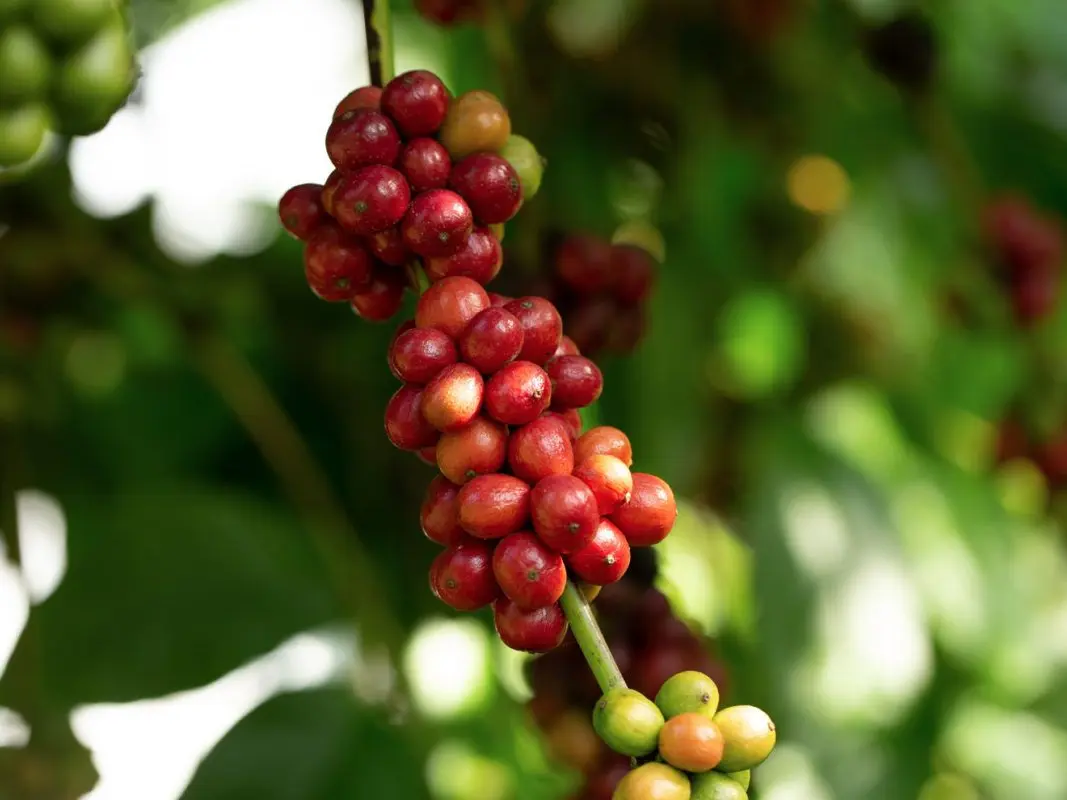
Another immediate impact is at farm level. When roads are blocked and processing access is delayed, coffee cherry becomes highly time-sensitive. In affected areas, a portion of harvested cherries reportedly rotted before they could be delivered and processed. That loss can reduce usable volume and can also increase pressure on the remaining harvest to move quickly.
At Le Green Coffee, we have managed to reconnect with affected farmer partners. Thankfully, many have regained access, but current movement remains limited to small lots, typically not more than 2 metric tonnes per dispatch. For buyers, this points to a season where planning, staging, and lot-by-lot quality control will matter more than usual.
This article takes a buyer-focused look at what the floods could mean for Arabica from Sumatra in the coming months: how supply and demand may shift, where quality uncertainty can show up, and why some roasters and traders are already exploring alternatives such as Toraja, Java, Flores or other Indonesian single origins.
Why a flood becomes a coffee problem (even weeks later)
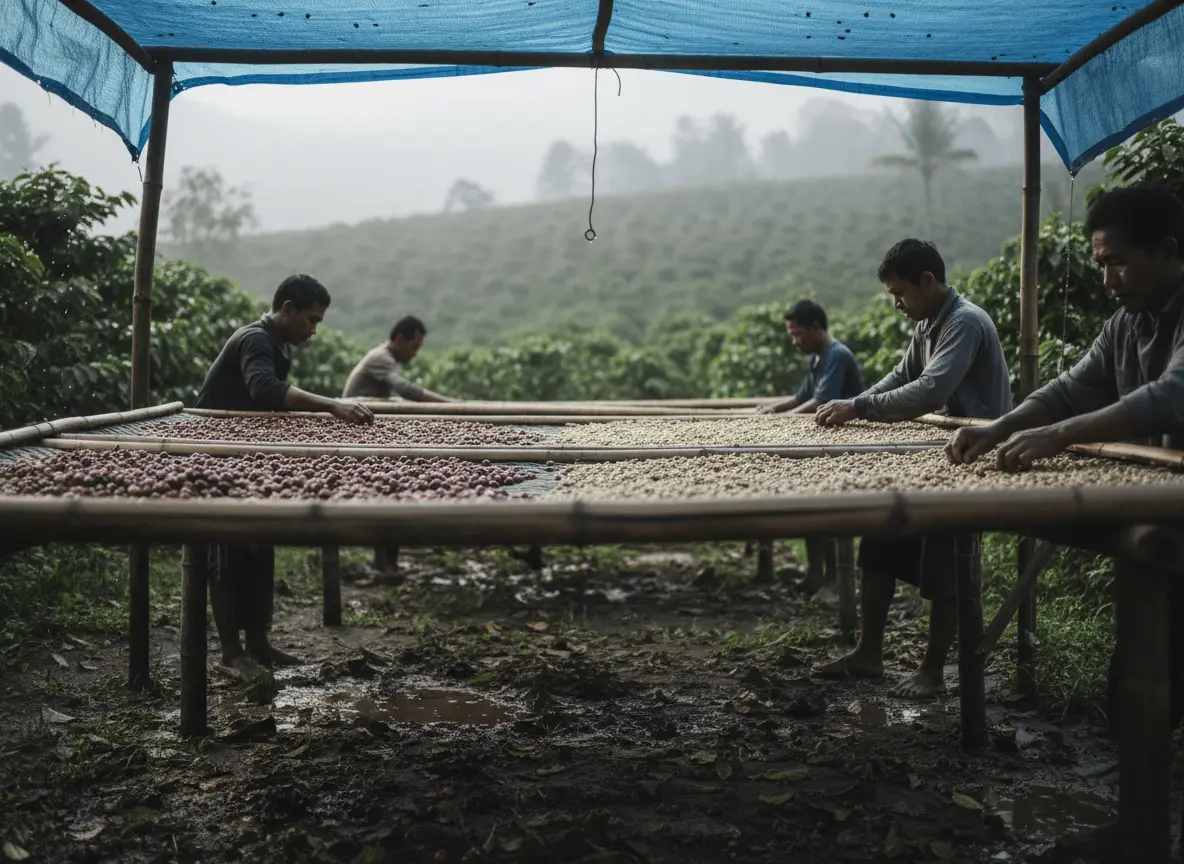
Coffee is unusually sensitive to infrastructure. Even when farms and trees survive, the steps that turn cherry into exportable green coffee, processing, drying, storage, milling and transport, depend on stable access.
After major flooding, coffee risk often appears in three waves:
- Immediate access disruption: roads and bridges become impassable, isolating producing areas and delaying cherry delivery, parchment movement, or green-bean transport.
- Processing and drying constraints: damaged facilities, limited clean water, power interruptions and reduced labor availability can create bottlenecks.
- Delayed export and financing pressure: longer lead times can strain cash flow for producers and collectors, affecting how lots are handled, stored, and consolidated.
For buyers, the key point is this: the impact is not only “how much coffee exists,” but also “how reliably it can be processed to spec, kept stable, and shipped on time.”
What could happen to Arabica Sumatra supply
Arabica Sumatra is not a single uniform supply source; it is a network of producing communities, collectors, mills, and exporters. When one region is disrupted, supply can still move, but often less efficiently.
Right now, the constraint is not always total inaccessibility. In some areas, access has returned but only at reduced capacity. If bridge load limits and road conditions restrict trucks to smaller volumes, the supply chain shifts from fewer large movements to many smaller dispatches. That can slow consolidation and increase handling steps.
At the same time, cherry loss from rot can tighten supply in a way that is not always visible in early market signals. If a portion of cherry never makes it to processing, the reduction shows up later as fewer exportable lots, especially in grades that require cleaner selection and tighter defect tolerance.
Potential supply outcomes include:
1. Short-term tightness in specific micro-regions
If certain producing areas remain isolated, coffee from those zones may arrive late to mills or miss optimal processing windows.
2. More uneven lot availability
You may see fewer “clean, consistent, repeatable” lots and more variation in volume by grade, screen size, and defect profile.
3. Longer lead times and less predictable shipping schedules
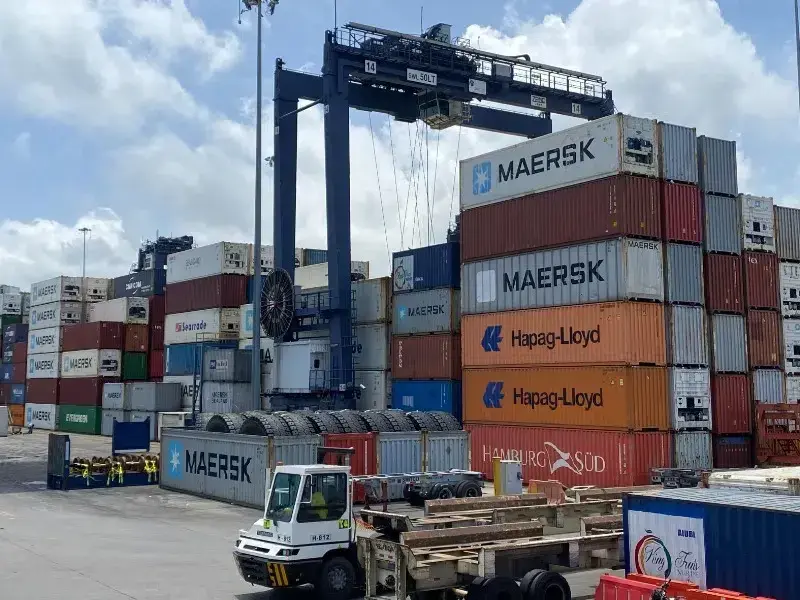
Even if coffee is available, logistics constraints can extend timelines for trucking, consolidation, and port movement. Limited bridge capacity can also cap dispatch sizes, for example 1 to 2 metric tonnes per movement, until infrastructure is fully restored.
4. A shift toward coffees that are easier to move
In disruption periods, supply chains often prioritize lots that are already milled, already warehoused, or closer to stable transport routes.
Quality uncertainty: where it shows up first
Floods do not automatically mean “bad coffee.” But they do increase the probability of quality drift, especially for coffees that require careful drying and stable storage.
International buyers should watch for:
• Moisture and stability variation
If drying is interrupted or rushed, moisture content and water activity can become inconsistent. That can raise the risk of baggy cups, moldy notes, or faster aging in transit.
• Higher defect rates from handling and delays
Delays between picking and processing can increase defects. Transport disruptions can also increase re-bagging, re-handling, and contamination risk. When coffee must move in smaller batches, it can also mean more transfer points, which makes careful bag handling and warehouse discipline even more important.
• Cherry-to-parchment conversion risk
If cherry sits too long before pulping or drying, it can ferment unintentionally or rot. Even when rotted cherry is removed, the overall selection pressure can change the lot composition and yield.
• Less uniform cup profiles
When lots are consolidated under time pressure, the “same name” origin can taste less consistent than usual.
• Storage stress
If warehousing conditions are compromised (humidity, ventilation, pest control), green coffee can lose vibrancy faster.
A practical buyer response is to request more objective QC data per lot, moisture, water activity, screen distribution, defect counts, plus updated pre-shipment checks.
Pricing and market behavior: why the impact can spread
Even if the global market does not react immediately, disruption in a well-known origin often triggers a chain reaction:
- Risk premium: buyers may pay more for “verified stable” lots with strong QC documentation.
- Substitution: roasters and traders explore alternatives to protect their menu continuity.
- Speculation and uncertainty: when information is incomplete, pricing can move faster than fundamentals.
In practice, you may see a split market:
- Top-end, well-documented lots command stronger prices.
- Lower-traceability or inconsistent lots face heavier scrutiny, more rejections, or discounted pricing.
Will buyers switch away from Arabica Sumatra?
Some switching is already common in specialty coffee for reasons unrelated to disasters: seasonality, flavor exploration, and portfolio diversification.
After a major disruption, switching tends to accelerate for three reasons:
- Menu reliability: roasters need consistent supply for blends and single origins.
- Lead-time risk: importers prefer origins with predictable logistics.
- Quality assurance: buyers may favor suppliers who can provide stable QC metrics and repeatable profiles.
This is why you may hear more interest in Indonesian alternatives such as:
- Toraja: often valued for structure and sweetness.
- Java: known for a wide range of profiles depending on processing and region.
- Flores: frequently sought for chocolatey, spice-adjacent notes and approachable acidity.
These shifts do not necessarily replace Sumatra permanently, but they can change purchasing patterns for a season.
The political conversation
Large natural disasters often trigger debate about land use, regulation and long-term environmental planning. In Indonesia, discussions about deforestation, plantation expansion and watershed management can become politically charged.
For coffee buyers, the most productive approach is to stay neutral on political narratives while still engaging with measurable risk factors:
- Land-use change and flood risk are widely studied topics globally, and different experts may interpret causes differently.
- Plantation economics vs. ecosystem resilience is a real trade-off discussion in many producing countries.
- Policy proposals can create uncertainty for agriculture, but outcomes are rarely immediate or linear.
If your goal is responsible sourcing, focus on what you can verify:
- Farm-level traceability and geolocation where available
- Evidence of shade-grown or agroforestry practices where applicable
- Supplier transparency on processing, drying and storage controls
- Compliance readiness for regulations that matter to your market (for example, due diligence expectations)
What international buyers should do now (practical checklist)
If you buy Arabica Sumatra, or plan to, use this period to tighten your buying process rather than pause it.
1) Ask for updated lot-level QC data
Request, at minimum:
- Moisture content
- Water activity
- Screen size distribution
- Defect count
2) Confirm post-flood handling and storage conditions
Ask your supplier:
- Where the coffee is currently stored (location and warehouse conditions)
- Whether the coffee was re-bagged or re-transported due to road closures
- Whether pre-shipment re-checks will be done right before export
3) Build in timeline buffers
If you are planning launches or seasonal menu rotations:
• Add buffer time for milling, consolidation and port movement
• Consider splitting shipments or booking earlier than usual
4) Diversify without abandoning the origin
A balanced approach:
- Keep Sumatra in your portfolio if you can secure stable lots
- Add one or two Indonesian alternatives (Toraja, Java, Flores) as contingency
- Consider smaller trial volumes first, then scale once consistency is proven
5) Communicate transparently with your customers
If you are a roaster, your audience often appreciates clarity:
- Explain that weather events can affect availability and lead times
- Frame changes as seasonal sourcing decisions, not permanent judgments
A note on Mandheling vs. “Arabica Sumatra” naming
Buyers sometimes ask whether they should “switch to Mandheling.” In practice, naming can vary by market channel, exporter, and historical trade usage. What matters most is not the label, but the lot’s verified origin, processing details, and QC results.
If you are comparing options, compare:
- Traceability depth (region, cooperative, farm cluster)
- Processing method and drying protocol
- Stability metrics (moisture and water activity)
- Cup profile consistency across multiple samples
Outlook: uncertainty, but not a dead end
It is too early to predict exactly how the floods will reshape Arabica Sumatra supply, pricing, and quality. But uncertainty does not have to mean paralysis.
For international buyers, the best move is to treat this as a period where documentation, QC discipline, and supply-chain communication matter more than ever. The coffees that will stand out are the ones backed by clear data, careful post-harvest handling, and realistic logistics planning.
If you are sourcing Arabica Sumatra and want a supplier-side checklist (QC metrics, traceability fields, and pre-shipment inspection steps), we can share a buyer-ready pack tailored to your target spec and shipping terms.
Click here to get in touch with us.