Basic of Coffee
Coffee Waste Isn’t Waste: Circular Economy Opportunities From Farm to Roastery
Published: May 13, 2026 05:33 AM
Written by: Admin
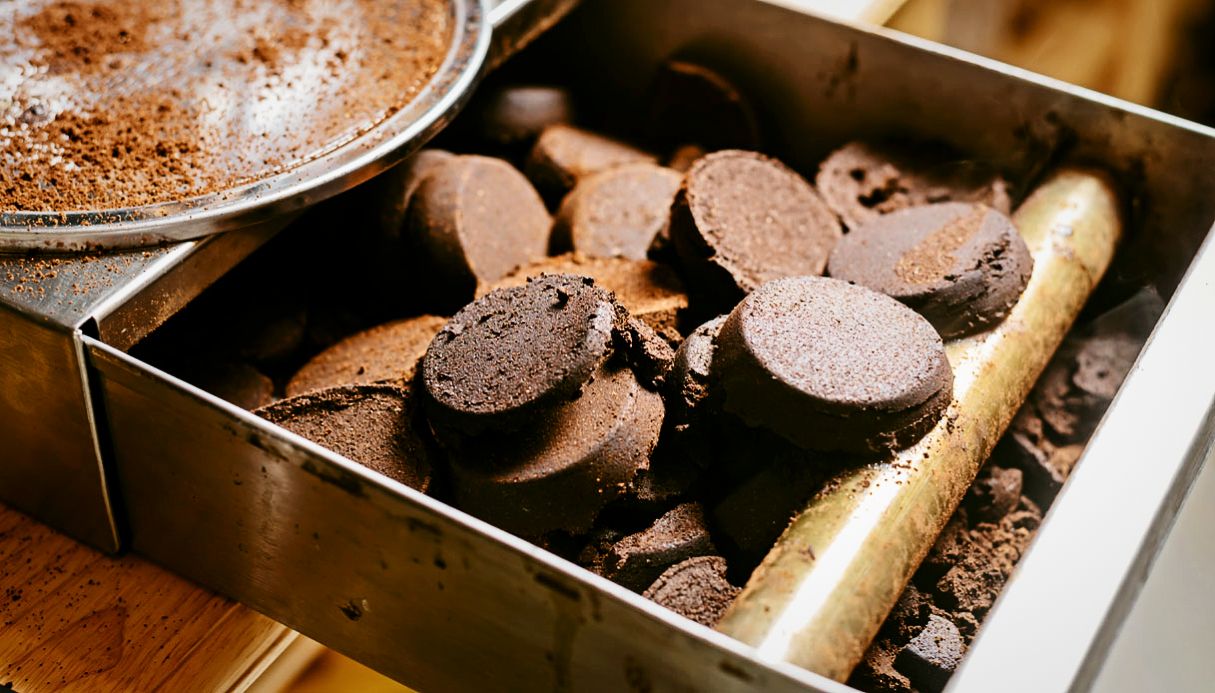
Coffee is often discussed through the lens of origin, processing, and flavor. But there is another story that matters more every year to buyers, regulators, and sustainability teams: what happens to coffee materials after each step of the value chain. The end-life cycle of coffee does not stop at the cup. It continues through pulp, wastewater, husk, chaff, and spent coffee grounds, and the way these by-products are handled can either create environmental risk or unlock new value.
Recent i7ndustry reporting has highlighted two connected realities. First, coffee waste sent to landfill contributes to greenhouse gas emissions, especially methane, and can create leachate that risks soil and groundwater. Second, at origin, integrated farm support and nutrient strategies are increasingly tied to practical, measurable interventions such as soil testing, targeted input use, and better management of organic materials. When you combine these perspectives, a clear opportunity appears: coffee can become a stronger example of circular economy thinking, where by-products are treated as inputs, not disposal problems.
Why the end-life cycle of coffee matters
Globally, coffee is consumed at massive scale. With billions of cups brewed each day, spent coffee grounds accumulate quickly. When organic waste breaks down anaerobically in landfill, it produces methane and carbon dioxide. Methane is particularly concerning because it is highly potent at trapping heat over a 20-year period. Beyond emissions, coffee compounds can contribute to acidic leachate, which may seep into soil and groundwater if landfill systems are not well managed.
For many businesses, the default response has been to treat coffee waste as an unavoidable cost. But the emerging shift is to treat it as a resource stream. That shift is not only about environmental responsibility. It is also about economics, innovation, and resilience. If coffee by-products can be redirected into higher-value uses, the industry reduces landfill pressure while creating new revenue or cost-saving pathways.
Origin circularity: pulp and wastewater as nutrient assets
At origin, the most immediate circular economy opportunity is to manage processing by-products in ways that support soil health and reduce environmental risk. Coffee pulp and wastewater can become hazards if unmanaged, but they can also become inputs if handled properly.
Industry initiatives in East Africa have shown how integrated nutrient management can start with a basic question: what does the soil actually need. Portable soil scanning and field-based guidance can help farmers avoid wasting money on inputs that do not match soil conditions. This matters because many smallholders operate with thin margins, and misapplied fertilizer is both a financial and environmental loss.
Where circularity connects is in the organic material loop. Pulp can be composted, used as mulch, or processed through systems such as vermicomposting or black soldier fly approaches, depending on local feasibility. These methods can convert organic waste into soil amendments, improving structure and moisture retention. Wastewater management, including containment and treatment approaches, helps reduce runoff risks and protects local water sources.
For buyers, the key point is not to expect every origin to have advanced systems immediately. The key is to understand whether a supplier and its partners are aware of the risks, taking steps to improve, and able to discuss practical options.
Post-consumer circularity: spent grounds as a resource stream
At the consumption end, the challenge is collection. Spent coffee grounds are dispersed across thousands of cafes, offices, and homes. This makes logistics harder than at industrial sites. Still, innovation is accelerating.
One example highlighted in industry reporting is a European startup extracting valuable compounds from spent grounds, including oils, waxes, antioxidants, fibers, and sugars. The idea is to treat spent grounds as feedstock for food, beauty, and industrial applications, creating higher value than low-margin uses like basic composting or fuel. The business case becomes stronger when grounds are concentrated, such as at instant coffee factories or large beverage production sites.
Other concepts gaining traction include using coffee waste in construction materials, producing biochar, creating textiles infused with coffee compounds, and developing biodegradable insulation materials. These examples show that coffee waste can be redirected into multiple sectors, not only agriculture.
What buyers can ask: a practical circularity checklist
If you are sourcing green coffee, you may wonder how to evaluate circular economy readiness without turning every conversation into an audit. A simple approach is to ask a few consistent questions and look for clarity, not perfection.
At origin and wet mill level
• How is coffee pulp handled during peak harvest periods
• Is wastewater contained or treated to prevent runoff into waterways
• Are there composting, mulching, or other organic reuse practices in place
• What constraints exist, such as space, labor, or infrastructure
At roastery and cafe level
• Are spent grounds separated from other waste streams
• Is there a local collection partner or reuse pathway
• Are there pilots for composting, biochar, or material reuse
Across the supply chain
• What improvements are planned over the next 12 months
• Who is responsible for implementation and monitoring
• What evidence can be shared, such as photos, SOPs, or partner descriptions
These questions help buyers identify suppliers who can communicate transparently and who treat sustainability as an operational topic, not only a marketing claim.
Why this is relevant for an Indonesian Coffee Supplier
Indonesia is one of the world’s most important coffee origins, known for its diverse growing regions, unique processing methods, and varied farm structures. From Sumatra and Java to Sulawesi and Flores, each region offers distinct flavor profiles and production characteristics. However, this diversity also means that by-product management practices can differ significantly between farming communities and processing facilities. For international buyers, working with an experienced Indonesian Coffee Supplier can help reduce sourcing challenges and improve communication across the supply chain.
A knowledgeable supplier can provide valuable insight into regional realities, including what sustainability practices are already in place, what operational improvements are feasible, and which environmental priorities deserve the most attention. This local understanding is especially important when discussing by-product utilization, waste reduction, and long-term sustainability goals. Rather than applying a one-size-fits-all approach, effective sourcing partnerships recognize the unique conditions of each producing area.
Le Green Coffee supports buyers who want to source Indonesian green coffee with a long-term and responsible mindset. The company believes that circular economy thinking aligns naturally with sustainable coffee sourcing because it encourages continuous improvement, practical collaboration, and better resource management throughout the supply chain. Coffee by-products such as pulp, husk, and wastewater should not simply be viewed as waste, but increasingly as resources that can be reused, repurposed, or managed more efficiently.
The objective is not to position circularity as a perfect or finished system. Instead, it is about building transparent sourcing relationships where environmental risks are better understood, sustainability practices evolve over time, and both suppliers and buyers work together toward measurable improvements. Through collaboration, education, and realistic planning, circular economy principles can become a practical part of Indonesian coffee sourcing rather than just a sustainability concept.
Contact us
If you are exploring Indonesian sourcing and want to discuss sustainability expectations also circular economy questions, contact Le Green Coffee. We will be happy to assist you navigate practical considerations and align sourcing decisions with your business goals.
Reference
https://www.gcrmag.com/the-end-life-cycle-of-coffee/
Other Articles
Future of Coffee
Java’s Long Shadow: Why Indonesia Is Still One of Coffee’s Most Important Origins
Basic of Coffee