Indonesian Coffee Journey
Java Coffee: The Historic Bean That Shaped Global Coffee Culture
Published: November 04, 2025 11:35 AM
Written by: Admin
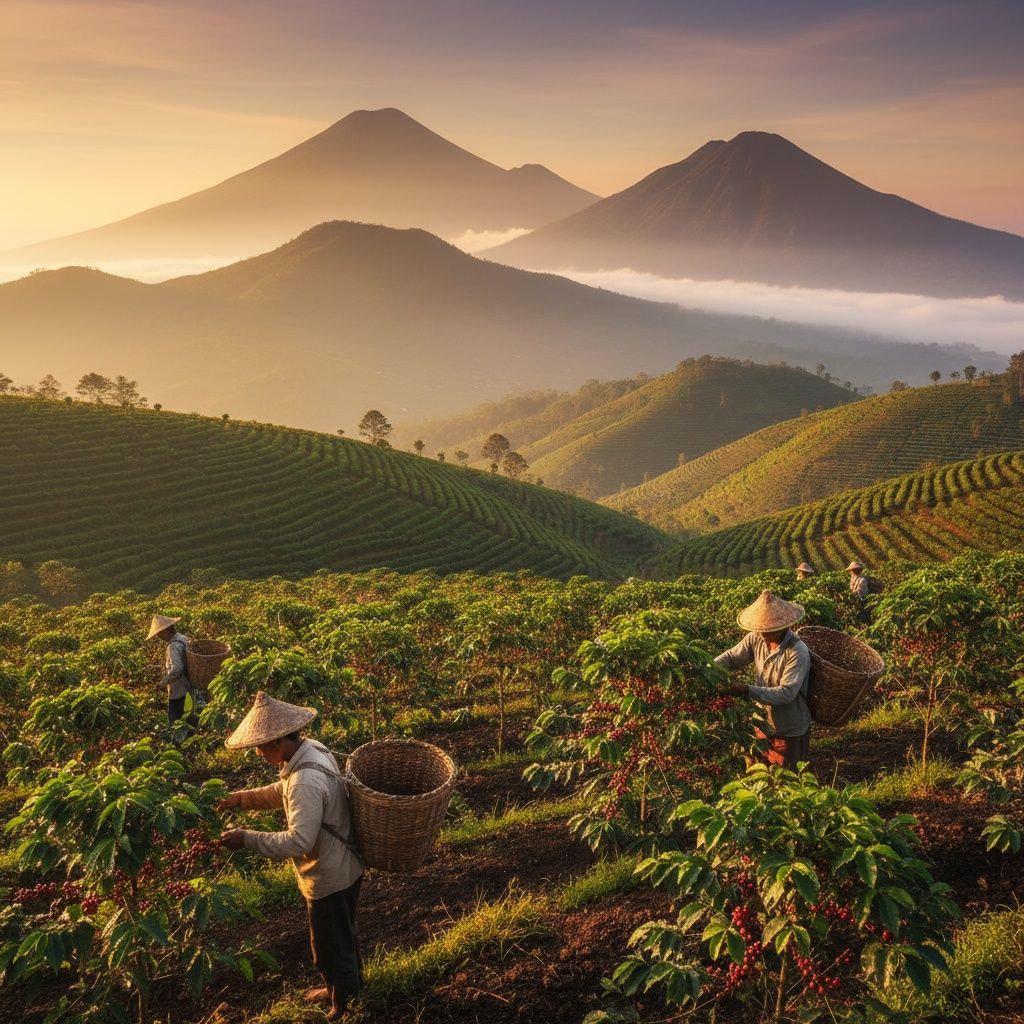
When someone says, "Let's grab a cup of java," they're unknowingly paying homage to one of the world's most historic coffee-growing regions. Java, Indonesia's most populous island, has been synonymous with coffee for over 300 years, shaping global coffee culture and trade in ways few other origins have achieved.
The Legendary History of Java Coffee
Dutch Colonial Beginnings (1696)
Java's coffee story began in 1696 when Dutch colonists introduced Arabica coffee plants from Yemen to the island. The volcanic soil, tropical climate, and ideal altitude created perfect growing conditions. By the early 1700s, Java had become one of the world's primary coffee suppliers, with "Java" becoming a global synonym for coffee itself.
The Coffee Rust Crisis
In the 1880s, coffee leaf rust (Hemileia vastatrix) devastated Java's Arabica plantations. Farmers responded by transitioning to more disease-resistant Robusta varieties, fundamentally changing Java's coffee profile. Today, Java produces both Arabica and Robusta, with specialty producers reviving heirloom Arabica cultivation.
Modern Java Coffee Production
Contemporary Java coffee comes from several key growing regions, including East Java (Ijen Plateau, Jampit), Central Java (Temanggung), and West Java (Pangalengan). These areas produce everything from commercial-grade to specialty beans.
Java Coffee Flavor Profile
Typical Characteristics
Arabica Java Coffee:
- Body: Full, heavy, syrupy
- Acidity: Low to medium, smooth
- Flavor Notes: Earthy, herbal, dark chocolate, tobacco, spice
- Finish: Clean with lingering sweetness
Robusta Java Coffee:
- Body: Very heavy, creamy
- Flavor Notes: Nutty, woody, dark chocolate, low acidity
- Caffeine: Nearly double that of Arabica
- Use: Excellent for espresso blends and traditional Indonesian coffee
Processing Methods Impact
Wet-Hulled (Giling Basah):
The traditional Indonesian method creates Java's signature earthy, full-bodied profile with lower acidity. This process involves removing the parchment while beans are still moist, creating unique flavor characteristics.
Washed Process:
Produces cleaner, brighter cups with more pronounced acidity and clarity of flavor. Increasingly popular among specialty coffee producers.
Natural & Honey Process:
Creates fruity, wine-like flavors with enhanced sweetness and complexity. These methods require longer drying times and careful monitoring but command premium prices.
Why Java Coffee Remains Premium
Volcanic Terroir
Java's volcanic soil is rich in minerals that contribute to coffee's complex flavor development. Mountains like Mount Ijen and Mount Merapi create microclimates with ideal temperature fluctuations for slow cherry maturation.
Altitude Advantages
Premium Java Arabica grows at 1,200-1,800 meters above sea level, where cooler temperatures allow beans to develop more complex sugars and acids.
Heritage Varieties
Some Java estates still cultivate heirloom varieties like Typica and ancient cultivars dating back to the original Dutch plantings, offering unique flavor profiles unavailable elsewhere.
Quality Certifications
Modern Java coffee producers increasingly employ certified Q-graders and implement rigorous quality control, elevating Java's position in the specialty coffee market.
Brewing Recommendations for Java Coffee
Best Brewing Methods
- French Press: Highlights Java's full body and rich, earthy notes
- Pour Over: Brings out subtle complexity in washed Java beans
- Espresso: Excellent crema and body, especially with Robusta blends
- Cold Brew: Smooth, chocolatey, low-acid refreshment
Brewing Tips
- Grind Size: Medium to medium-coarse for most methods
- Water Temperature: 195-205°F (90-96°C)
- Ratio: 1:15 to 1:17 (coffee to water)
- Bloom Time: 30-45 seconds for pour-over methods
Sourcing Quality Java Coffee
What to Look For
- Origin Specificity: Look for estate names or specific regions (e.g., "Ijen Plateau" rather than just "Java")
- Processing Method: Understand how wet-hulled vs. washed affects flavor
- Roast Date: Fresh coffee (within 2-4 weeks) ensures optimal flavor
- Certifications: CQI certification or Q-grader evaluation indicates quality assessment
Supporting Sustainable Practices
Choose suppliers who:
- Work directly with farmers
- Provide transparent pricing
- Support farmer training and equipment
- Implement quality control at origin
The Future of Java Coffee
Java coffee is experiencing a renaissance as specialty coffee buyers rediscover its unique characteristics. Increased investment in processing infrastructure, farmer education, and quality-focused cultivation is elevating Java's position in the global specialty market.
Modern Java coffee producers are balancing tradition with innovation—preserving heritage processing methods while experimenting with new varieties and techniques. This approach ensures Java coffee remains relevant for both traditional coffee lovers and adventurous specialty coffee enthusiasts.
Conclusion
Java coffee represents more than just a beverage—it's a living connection to coffee history, a testament to agricultural resilience, and a showcase of Indonesia's rich coffee heritage. Whether you prefer the traditional earthy boldness of wet-hulled Java or the bright complexity of washed specialty lots, Java coffee offers something unique that few other origins can match.
The next time you enjoy a cup of "java," take a moment to appreciate the centuries of cultivation, the volcanic terroir, and the dedicated farmers who continue to produce one of the world's most historic and distinctive coffees.
Ready to experience authentic Java coffee? Explore our selection of specialty and commercial-grade Java beans, each carefully evaluated by our CQI-certified team and sourced directly from trusted farmer partners across East Java.
Other Articles
Future of Coffee, Trending Coffee
When a Major Port Stumbles, Coffee Supply Gets Tested: A Resilience Lesson for Global Buyers
Future of Coffee